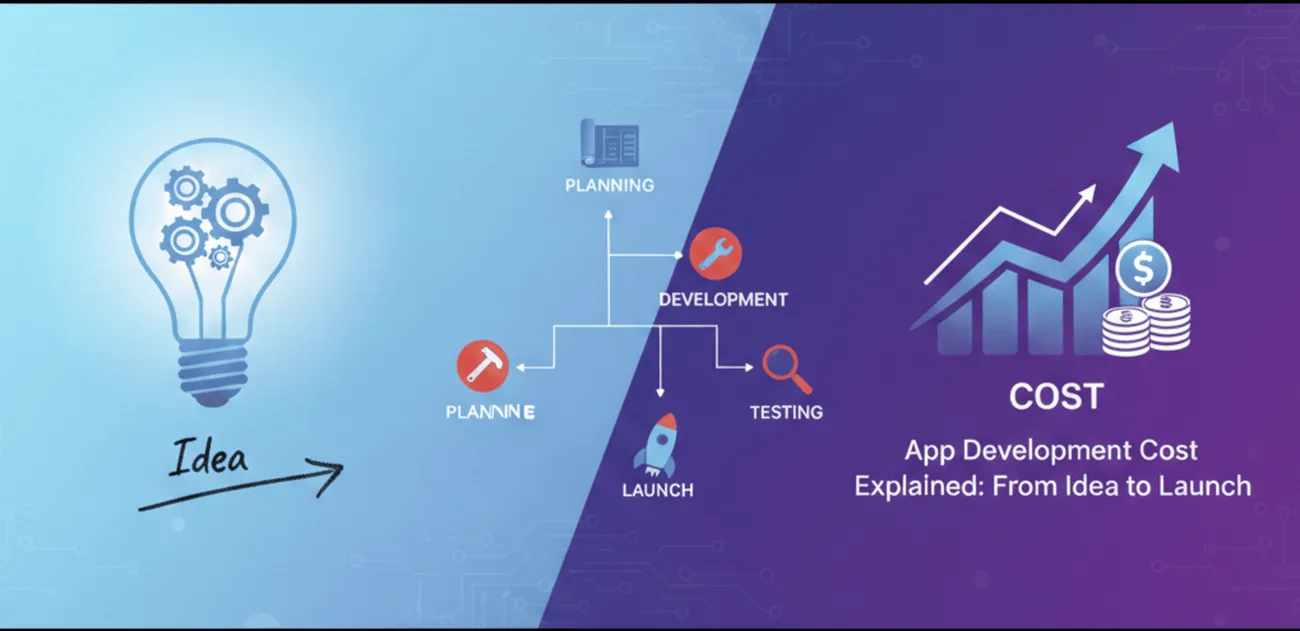
App Development Cost Explained:From Idea to Launch
Summary:
Developing an application can cost from a few hundred to a few million. It depends on the features, platform, the complexity of design, backend infrastructure, security requirements, and staff. In fact, you can create simple apps at a low cost, but if you want to develop complex, enterprise, grade applications, you have to invest highly and plan for a long time. The secret to managing your budget is to start with an MVP, clearly define the scope at the beginning, select the appropriate technology stack, and build in iterations based on actual user feedback. You will be able to create upscaled, good quality apps without wasting money if you prioritize the essential features, resist the temptation of adding new features, and keep the plan for the maintenance phase open. Once you have the correct methods and a development plan, making an app can be a well, calculated investment rather than a financial risk. It will also enable teams to nimbly go from a concept to a market, ready product.
So how much would it cost to build an app? Seemingly thousands of founders, product managers, and early, stage teams have this question in their minds. The succinct reply would be: it varies. This article digs into the deeper aspects of the matter. I will explain to you the main cost drivers, typical price ranges, and practical ways to control spending from idea to launch.
As someone who has come alongside teams and versed them in budget estimation at various stages, Ive witnessed the same errors being made repeatedly. Among my most valuable lessons, transparency regarding the scope and concessions made at the very beginning leads to significant savings in the future. Here you have a simple, straightforward digest of app development cost without any filler, supported by examples and practical advice from the real world.
Why is it so difficult to estimate app development costs?
"How much will it cost to develop my app?" I guess this is the question that we are asked most often. I'm afraid, there are so many variables that make up the answer. Will the app come out on one platform only or several? What features will it have and will it need any kind of integrations? How intricate will the design be? How big will the database be? What level of security and compliance will be required? After all, the location of the development team may also influence the cost. Well, it's somewhat like building a property in the real world. A small studio flat will only need a fraction of the money that a multi, story office block with top, of, the, line amenities will require. Both of them are houses but an obvious one needs a different budget and different builders.
Major cost drivers what affects app development pricing
Those are the major aspects that influence app development cost. I will take each one of them separately, explain what makes them matter, and give some simple examples. Scope and features. The number and complexity of the features is the main factor that determines the cost. A login screen is very cheap. Adding live chat, making payments, video streaming, or offline syncing are not. Platforms. Developing an app for iOS, Android, and web will be more expensive than for only one platform. Cross, platform tools can be a money, saver but might limit some custom experiences. Design. A completely new UI, animations, and perfect interactions take more time. A basic UI is quicker and cheaper. Backend and infrastructure. Any app that stores or manipulates data has to have servers, databases, APIs, authentication, and monitoring.Many companies also rely on MySQL managed services to design scalable database architecture, optimize performance, and ensure reliable data management. The intricacy of the backend has a great influence on the cost. Integrations. It can be very easy to connect to third, party services such as payment processors, CRMs, or analytics tools or it may have to be custom work if APIs are weak. Security and compliance. If your app involves handling payments, health data, or personal information, you might have to implement additional security measures and undergo some audits. Team composition and location. The rates depend on the location and skill level. You can hire a freelancer, an in, house team, or a development agency. Each has their pros and cons. Timeline. If you want the project done quicker, it will need more people and consequently be more expensive. If you want it in weeks instead of months,
High-level cost categories
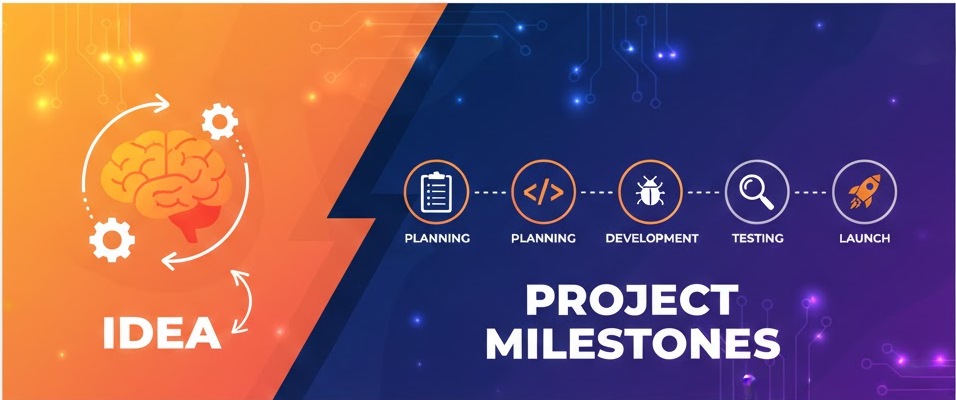
I like to categorize the expenses into familiar buckets. Such divisions make it a lot easier for me to plan budgets and communicate them. Discovery and planning. Research, scope definition, user flows, and project planning. During the discovery and planning stage, a PDF Summarizer can help founders and product teams quickly break down lengthy requirement documents, competitor research, and technical reports into structured insights. Design. UX, UI, prototypes, and design assets. Development. Frontend, backend, APIs, and integrations. Quality assurance and testing. Manual and automated testing, bug fixes, and performance checks. Launch. App store preparation, deployment, and launch, day support. Post, launch and maintenance. Monitoring, updates, new features, and hosting costs.
Typical timelines and cost ranges (realistic numbers)
Now let's talk about numbers: These ranges are intentionally broad because the scope of the project is an important factor, but they still offer a practical starting point when someone asks "how much does it cost to develop an app?" Costs mentioned below assume a professional team or agency. On the other hand, freelancer rates can be lower but frequently entail additional management time. All figures are in US dollars and correspond to typical market rates of the past few years.
Simple app
Examples are basic task tracker, content delivery app, simple informational app… I have come across well-scoped MVPs that were built for about $20k and were able to quickly prove product-market fit.This is also where MVP development Cost is easiest to control, because well-scoped MVPs keep the first release focused on one core workflow before expanding.
Medium complexity app
Examples: A marketplace including payments and social featuresApps requiring a moderate backendPlatforms: iOS and Android mobile platforms, and a web admin panelFeatures: User accounts, in, app payments, messaging, location services, third, party integrationsTimeline: 4 to 8 months Cost: $50, 000 to $150, 000 Allow for extra testing and design polishing. The payment flows and the marketplace logic bring more time and the need for compliance checks. Usually, I recommend a phased approach for these projects: launch the core experience first and then add advanced features.
Complex app
Examples: large, scale social networks, fintech platforms, enterprise apps with complex workflows. Platforms: Cross, platform mobile, web apps, admin dashboards, integrations with legacy systems Features: Real, time features, complex data processing, heavy security and compliance, scalable architecture Timeline: 9 months to 18 months + Cost: $150, 000 to $1, 000, 000 + These projects require architects, senior engineers, and sometimes a whole operations team. They are purchases, not trials. It is the biggest misjudgment of scope here that leads to exploded budgets most of the time.
How costs break down by phase
Here's an easy way to visualize how much percentage of the total cost each phase typically takes up. These figures are approximate but still good for planning. Discovery and planning: 5 to 10 percentDesign: 10 to 20 percentDevelopment: 40 to 60 percentQA and testing: 10 to 20 percentLaunch and post, launch: 10 to 20 percentDevelopment phase is the biggest spender of your budget. But skipping discovery is not a good idea. When teams invest 2 to 4 weeks early on for better scoping and risk reduction, they can save money dramatically in the long run, I've seen it firsthand.
Team roles and hourly rates
Another cost estimation method is to factor in who you need in your team and go with typical hourly rates. The rates depend on the region and level of experience. I will provide a representative range of the rates together with a brief description of each role. Product manager / owner: $50 to $150 per hour. Identifies the scope and priorities.UX/UI designer: $40 to $120 per hour. Works out the wireframes, mockups, and visual assets.Frontend developer: $50 to $150 per hour. Develops the user interface for the web or mobile.Backend developer: $60 to $160 per hour. Creates servers, APIs, and databases.QA engineer: $30 to $100 per hour. Checks the features and discovers glitches.DevOps / SRE: $60 to $180 per hour. Prepares hosting, scaling, CI/CD, and monitoring.Project manager / scrum master: $40 to $120 per hour. Makes sure the team adheres to the schedule and communicates well with each other.Sometimes a smaller team combines several roles. Usually, a fully, featured application demands a min. single designer, 2, 3 developers, and a QA person. If youre in for an enterprise or a complicated one, youll require senior engineers and a dedicated operations let.
Platform choices: native vs cross-platform vs web
Platform choice affects cost, performance and development time. Native (Swift iOS, Kotlin/Java Android). Excellent choice for performance and platform, specific features. If you decide to develop iOS and Android versions separately, then native apps are more costly. Cross, platform (React Native, Flutter). One codebase solution for two mobile platforms. For a large number of apps, it is faster and cheaper. But in some cases, native modules will be necessary. Progressive Web App (PWA) or responsive web app. Lower upfront cost and quicker to test different versions of the product. Limited access to device features so this approach may not be suitable for apps that need sensors, background processing, or deep integration with the OS. In my observation, startups usually choose cross, platform initially to shorten time to market and later switch to native when their demand for maximum performance or platform, specific features becomes absolute. This decision should be based on which features of your product are the most important.
Common feature costs — a quick reference
Breaking this down into something practical, below are rough time, based estimations for some typical features. By multiplying these by hourly rates, you will get approximate costs. Login and user profiles: 20 to 80 hoursPush notifications: 10 to 30 hoursIn, app purchases and subscription: 40 to 120 hoursGPS and maps: 40 to 120 hoursMessaging (chat): 80 to 200 hoursLive features (WebSockets): 100 to 300 hoursAdmin panel: 80 to 200 hoursThird, party API integrations: 20 to 100 hours each, based on complexityThey are commitments that I am not saying these are up to the mark all the time. It's typically pretty easy to integrate a payment gateway like Stripe. If the partner's documentation is very poor, it could even happen that the time required triples. I always keep some extra timebudget for unexpected events."
Hosting, third-party, and ongoing costs
Development is not the only cost. Post, launch, you will be required to pay for hosting, analytics, third, party services, and maintenance. Set a monthly running rate so you will not be caught off guard. Hosting and cloud services.Small apps are usually in the range of $20 to $200 per month. Production apps with real users can cost $200 to $5, 000 per month depending on traffic and processing needs.Third, party services.Payment processors, SMS gateways, email providers, analytics, and push services.Costs vary; some scale with users. Maintenance and updates. Set aside 10 to 20 percent of your initial development cost each year for the continuous improvements and security updates.Monitoring and error reporting.Using tools like Middleware, Sentry or Datadog contributes to the monthly bill butthey let you find and fix issues quickly. Dont ignore app store fees. Apple and Google deduct a percentage from in, app purchases and charge an annual developer program fee. These are minor compared to development but they add up in the long run.
How to control app development cost
Cost control is largely a matter of proper prioritization and staying away from the common pitfalls. Here is a list of handy tips that I keep encouraging teams to follow: Start with an MVP. Create the minimum version that sufficiently proves your core value proposal. Hold feature additions until you have confirmed the demand. Go through a thorough discovery phase. Spending 2 to 4 weeks on user research and defining the scope can save you weeks of rework later. Limit the scope very strictly. Prepare precise acceptance criteria for the features so developers can be sure of the end of the development. Where it is reasonable, use ready, made products. Admin panels, auth services, and analytics usually do not require custom builds. Give priority to parts of the system that are the most critical in terms of performance. First, optimize the areas that have the greatest impact on user retention. Think about incremental rollouts. Start with a release to a small group of users, get their feedback, and then broaden the release. Make testing and deployment automated. CI/CD helps repeated releases go faster and there are fewer manual errors. Maintain a small and focused team. Adding more people doesnt always bring faster results. Cross, functional teams shorten the time that is spent on the transition. One of the traps I often come across is scope creep. You add one feature during the development, then another one, and after two months the cost has doubled. Close the scope for a sprint and put new ideas aside for the next release.
Phased approach: a practical plan for startups
A phased approach allows you to keep your expenses in line and gain early insights. I give a three, phase plan as an example. Phase 1 Discovery and MVP. Test the key hypotheses with mockups and a bare, bones product feature set. A timeframe of weeks and not months. Price: $10k, $50k depending on complexity. Phase 2 Core product build. Add to the MVP with features that the first users will pay for. Concentrate on growth and retention indices. Price: $50k, $200k. Phase 3 Scale and polish. ... Performance tweak, platform, specific adjustments, and enterprise features depending on whether they are needed. This is the stage when you put in a greater effort to the infrastructure, security, and UX. Prices are very different. By releasing in phases, you will be able to observe the genuine behavior of users before you invest in the creation of costly features. Teams that I have witnessed finding a better product, market fit by repeatedly testing based on what users actually do rather than what the team assumes that the users will do.
Real examples: simple, medium, and complex app scenarios
Concrete examples help make abstract numbers real. Below are three short scenarios with likely costs and timelines.
Example 1: Simple local service app
Imagine a local handyman app that would have all the things a user needs to browse through services, book them, and pay. Core features: user registration, service catalog, booking calendar, Stripe payment, simple admin panel. Platform: cross, platform mobile app and lightweight web admin. Timeline: 3, 4 months. Estimation: $30, 000, $70, 000. Such a local services MVP is quite standard. Don't rush the first launch; add the provider ratings and reviews feature later.
Example 2: Marketplace app
Imagine a marketplace that allows buyers and sellers to connect, featuring profiles, messaging, payments, and search. Main features: registration process of two different user types, postings, search with filters, payments and withdrawals, chatting, rating system, admin panel. Platform: iOS, Android and web admin. Duration: 6 to 9 months. Budget: $80, 000 to $250, 000. Marketplaces have specific challenges: trust, payments, customer service, and the supply, demand equilibrium. Make sure that you plan on making changes based on users feedback and behavior.
Example 3: Fintech app
A finance apps with features like account aggregation, transaction history, and regulatory requirements compliance. Main features include secure access, bank integrations, transaction listings, analytical features, and compliance capabilities. The work was planned for a Mobile and web platform, with secure backend and audit trails. Duration: 9 to 18 months. Rough Cost: $250, 000 to $1, 000, 000+. Security, audits, and the involvement of legal counsel are paramount for fintech projects. They are not the right place to cut corners in terms of both architecture and compliance.
Common mistakes and how to avoid them
I'll just get straight to the point. Misguided trade, offs can be the biggest reason why startups burn their money unnecessarily. Here are some of the errors I detect most frequently and how they can be avoided. Developing a lot of features before the launch. Concentrate on only one problem that you are solving the most. Put it on the market, get feedback, and keep improving it. Disregarding discovery. In the absence of user research and well, defined acceptance criteria, developers work on their assumptions rather than the actual requirements. Picking the wrong platform. If you decide to build the same native app for both platforms right away, you will double your expenses. Think about cross, platform during the early stages. Misjudging integrations. APIs which are very simple on the surface often have rate limits, edge cases and other hidden complexities. Overlooking maintenance costs. Be prepared for continuous bugs fixing, the OS updates and hosting charges. Set aside a budget to cover 10 to 20 percent of the costs annually. Don't fall into these pitfalls and you'll be able to achieve more with less money and less worry.
How to estimate your app development cost quickly
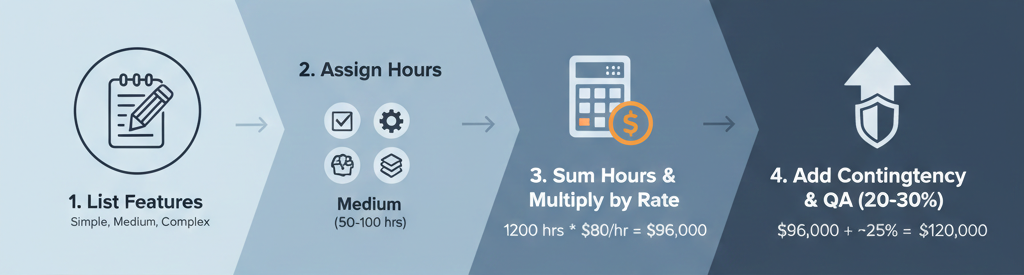
If you want a quick approximation, here is a basic method for getting a rough figure within an hour. Write down your essential features only.Give each feature a simple, medium, or complex grade.Refer to the typical feature hours mentioned earlier in this article to give hours.Add the hours and multiply by an average hourly rate for your preferred team location.Raise 20 to 30 percent for contingencies and QA.Suppose you total 1, 200 hours and decide to work with a team whose average rate is $80 per hour, then roughly budget $96, 000 plus a contingency amount. Simple, sensible, and you can tweak it later.
Working with agencies vs hiring in-house vs freelancers
Each choice comes with pros and cons. Here's a brief rundown of what you can expect. Agency. If you go this route, you will pay higher hourly rates, but you will get a whole team, a process, and often quicker time to market. Suitable for founders who want to concentrate on product and go, to, market. In, house. This way, you get ownership for the long haul and intimate product knowledge. On the downside, hiring takes time and raises fixed costs. Freelancers. Short term requirements can be met at a lower cost. However, there can be significant management overhead, and continuity is a risk. Ive worked with startups that initially engaged freelancers and subsequently changed to an agency to scale. That change is common and often essential as the product becomes a key element of the business.
Security, privacy, and compliance considerations
Security should not be considered an afterthought. It impacts architecture, testing, and costs. If your application processes sensitive information, you might require encryption, secure storage, audits, and adherence to regulations such as GDPR or HIPAA. Implementing compliance as an afterthought is commonly significantly more costly than integrating it into the original design. I have witnessed this scenario being played out as a practical lesson multiple times.
How Agami Technologies helps with app development cost planning
At Agami Technologies, we collaborate with founders and product teams to plan realistic budgets and build efficiently. We concentrate on validating assumptions at the earliest stage, outlining precise scopes, and picking the appropriate technology for your needs. If you want a partner who can take your idea and create a phased plan along with a cost estimate, we have done this numerous times. We are committed to assisting teams in steering clear of the most common errors, rapidly delivering MVPs that are usable, and establishing an admittedly flexible architecture for further development. Our method is a compromise between speed, quality, and investment so that you receive your goals met in terms of the results, rather than getting over, engineered prototypes.
Helpful links & next steps
If you want help estimating your White Label app development cost or creating a phased plan, Book a meeting with us to walk through your idea and get a tailored estimate: Book a meeting.
Final thoughts
Estimating mobile app development cost is half art and half science. You can quickly obtain helpful figures, but excellent results require deep planning, early user verification, and strict scope management. Ive witnessed small teams accomplish great product successes on limited budgets by concentrating on the main value and developing through genuine user feedback. Go for the MVP first, anticipate unexpected things, and maintain a flexible roadmap. If you require a second opinion, dont hesitate to contact me. I am willing to assist you in breaking the issue down and converting your concept into an achievable cost and schedule.
FAQs
1)How much does it typically cost to build an app?
The cost to build an app depends on its complexity, features, platform, and team location. Simple apps may cost between $15,000 and $50,000, while complex apps with advanced features can range from $150,000 to $1,000,000 or more.
2)What factors have the biggest impact on app development cost?
The biggest cost drivers include app features, platform choice (iOS, Android, web), design complexity, backend infrastructure, third-party integrations, security requirements, and development team rates.
3)Is it cheaper to build a cross-platform app instead of native apps?
Yes, cross-platform development using tools like React Native or Flutter is usually more cost-effective because a single codebase is used for multiple platforms. However, native apps may be better for performance-critical or platform-specific features.
4) How can startups reduce app development costs?