
Why Custom Software Gives Enterprises a Competitive Edge in 2026
Building on this shift, enterprises are also realizing that custom software gives them control, not just over features, but over their future growth. When systems are designed specifically for a business, teams spend less time adapting to software and more time focusing on what actually matters—customers, performance, and innovation.
Custom solutions also evolve as the business evolves. Instead of waiting for generic updates or paying for features that aren’t needed, enterprises can prioritize improvements that directly support their goals. This flexibility makes it easier to respond to market changes, adopt new technologies, and stay ahead of competitors.
In a landscape where speed, security, and efficiency define success, custom software becomes more than a technical upgrade—it becomes a long-term business strategy. Enterprises that invest in tailored digital solutions in 2026 aren’t just keeping up; they’re setting themselves apart.
Why Custom Software Gives Enterprises a Competitive Edge in 2026
Off-the-shelf tools used to be enough for a year or two. Today, they rarely are. Enterprises face faster markets, more complex supply chains, and higher customer expectations. In my experience, the organizations that win are those that treat software as a strategic asset—not a commodity.
Custom software development isn't just about building apps. It's about designing enterprise software solutions that match how your people actually work, scale with your growth, and unlock new business models. Whether you’re partnering with an internal engineering team or a trusted custom software development company Chicago enterprises depend on, the goal is to build systems that create long-term strategic advantage. In this piece I’ll walk through the practical advantages of bespoke software development, explain common pitfalls I’ve seen companies hit, and show how to evaluate long-term ROI for scalable business software.
Why "custom" matters now more than ever
Generic software can be a useful starting point. It’s usually cheap to buy and fast to deploy. But those short-term wins can hide three big costs: productivity friction, missed differentiation, and escalating integration overhead.
- Productivity friction: Teams adapt to the tool instead of the other way around. That wastes time on workarounds and manual steps.
- Missed differentiation: If your processes have unique advantages, off-the-shelf software flattens them out, making it harder to compete.
- Integration overhead: As you add more niche tools, the cost and complexity of connecting them rises—think brittle integrations and duplicated data.
Custom application development flips that script. Instead of bending around software limits, you design software tailored for business growth. That doesn’t mean ignoring commercial products. The smart approach mixes custom modules with best-in-class platforms and APIs.
Top business benefits of bespoke software development
I’ll be blunt: custom software is an investment. But when executed well, the payoff is clear and measurable. Here are the core advantages enterprises should expect.
1. Real scalability—on your terms
Scalability isn’t just about supporting more users. It means your system can handle new geographies, data volume spikes, and expanded product lines without replatforming.
With scalable business software, you pick the architecture—microservices, event-driven, serverless—that fits your tradeoffs for latency, cost, and operational overhead. In my experience, companies that design for scale from the start avoid expensive “lift-and-rebuild” projects later.
2. Process alignment and higher productivity
Off-the-shelf products force you into a workflow. Custom software maps directly to your processes. That removes friction and reduces training time—especially important when onboarding large teams or partners.
I've seen companies cut process times by 20–40% simply by automating approval flows and surfacing the right data at the right time. Those are compounding gains: faster decisions, fewer errors, and better utilization of expensive talent.
3. Competitive differentiation
When you own your software, you own your differentiators. Unique algorithms, specialized UX for your customers, or integrations with proprietary sensors and hardware can all become defensible advantages. For example, a media or marketing platform might build its own Instagram reel maker as a proprietary feature to attract creators and increase platform stickiness. For example, a media or marketing platform might build its own proprietary feature to attract creators and increase platform stickiness.
One client I worked with turned a complex procurement process into a product feature—this alone gave them a clear win when negotiating with large enterprise partners.
4. Lower long-term costs and better ROI
The sticker price of commercial software can look appealing, but recurring licensing, customization fees, and escalating integration costs add up. Bespoke software has higher upfront costs but lower marginal costs as you scale.
To analyze total cost of ownership (TCO), you need to model three factors: license/subscription costs, integration and maintenance overhead, and the revenue or efficiency gains from improved workflows. When you include productivity improvements and faster time-to-market, custom solutions often win in 3–5 years.
5. Security, compliance, and control
Enterprises have strict compliance needs: data residency, audit trails, or industry-specific regulations. Custom software lets you bake compliance into workflows and architecture. That’s not only safer; it’s auditable and defensible during regulatory reviews.
We’ve designed systems with fine-grained access controls, automated audit logs, and custom encryption strategies. Those choices matter when breaches or audits happen—because they reduce both risk and disruption.
How custom software fits into digital transformation for enterprises
Digital transformation often sounds vague. A key lesson I’ve learned is that transformation succeeds when it’s tied to discrete business outcomes: reduce churn, increase sales velocity, or automate a manual operation.
Custom application development plays three roles in that journey:
- Foundation: Replace brittle legacy systems with an extensible platform.
- Acceleration: Build critical differentiators that unlock new revenue or cut costs.
- Integration: Connect data and processes to remove organizational silos.
Start small. Prioritize a pilot that addresses a high-value outcome with limited complexity. That gives you quick wins, lessons, and proof for broader investment.
Design and architecture choices that matter
Not all architectures are created equal. Choosing the wrong one is a common and costly mistake. Here’s what I recommend focusing on early.
API-first and modular design
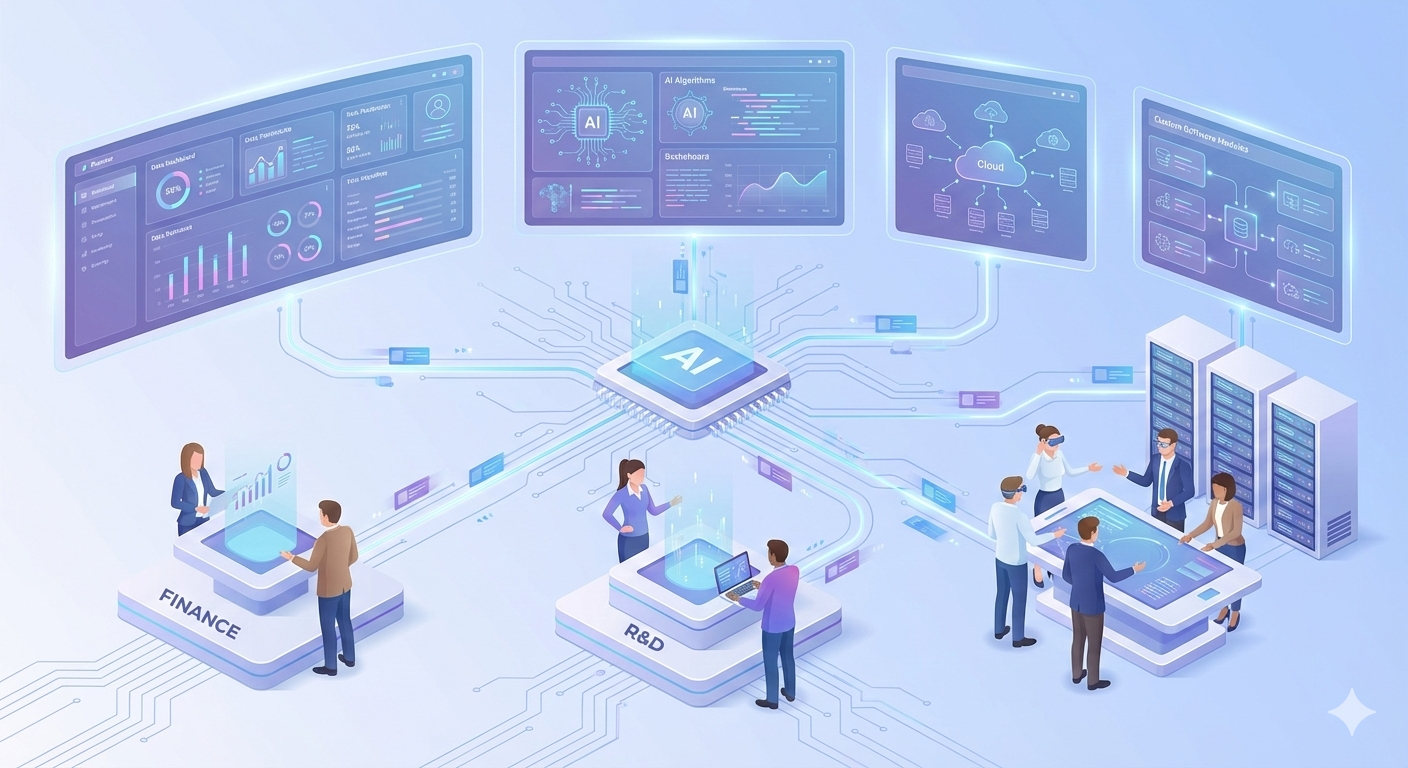
Design APIs as first-class products. That makes integrations predictable, testable, and reusable. An API-first approach also lets you compose functionality from both internal and third-party services without tight coupling.
Event-driven patterns for responsiveness
Event-driven architectures reduce latency for user-facing features and improve resilience for asynchronous processes like data pipelines. When you decouple components, you also make scaling and troubleshooting easier.
Observability and ops from day one
Observability isn't optional. Instrumentation—metrics, logs, and traces—helps you find problems before customers do. In my experience, teams that invest in monitoring and SRE practices early spend far less time firefighting later.
Cloud-native, but with cost discipline
Cloud platforms give you agility, but they can also create surprise costs if you don't manage resources carefully. Use autoscaling, spot instances where appropriate, and architect for cost—e.g., partitioning hot and cold data or optimizing network egress.
Real ROI examples and how to measure them
Let's get practical. You won’t get buy-in from a CFO with vague promises. Measure what matters.
- Operational savings: Hours saved per process * average hourly cost of the involved roles.
- Revenue lift: Time-to-market improvements for new product features or channels.
- Retention improvements: Reduced churn attributable to better UX or faster support resolution.
- Risk reduction: Quantify avoided fines, breach costs, or downtime losses.
For a mid-size enterprise, a 20% reduction in manual processing can translate into six-figure annual savings. For a SaaS company, improving onboarding completion by 5% can increase ARR substantially. The numbers matter because they're how leadership approves projects.
Common mistakes and how to avoid them
I've seen many projects stall for reasons that could have been prevented. Here are the frequent pitfalls and practical fixes.
1. Starting with tech choices before business outcomes
Problem: Teams pick a language, framework, or cloud provider first. That drives the conversation into technical debates—for months.
Fix: Define business outcomes first. Then choose tech to meet those outcomes. Keep decisions pragmatic: pick what your team can operate well.
2. Underestimating integration complexity
Problem: Legacy systems expose limited APIs or require manual data exports. Projects assume easy integration and later run into hidden work.
Fix: Do a rapid integration assessment early. Map data flows, authentication, and SLA expectations. If an integration looks risky, isolate it in the MVP and handle it iteratively.
3. Ignoring change management
Problem: New software arrives but users don't adopt it. Productivity dips instead of improving.
Fix: Treat adoption as part of the product. Involve end users in design, provide role-based training, and instrument usage to iterate on UX quickly.
4. Building monoliths under the guise of speed
Problem: Teams think a single codebase is faster to ship. Over time it becomes a maintenance burden.
Fix: Aim for modularity. Even if you start with a single deployable, design interfaces that allow incremental extraction into services later.
5. Not planning for operations and maintenance
Problem: The project team disbands after launch, and no one owns the backlog or incident response.
Fix: Define operational ownership before launch. Set up support SLAs, incident response playbooks, and a budget for ongoing improvement.
How to choose a partner for enterprise custom software development
Choosing the right vendor matters. My tip: look for a partner who can show both technical depth and domain experience.
Ask these questions during vendor evaluation:
- Have you delivered similar enterprise software solutions in our industry? Ask for references and artifacts—not just marketing slides.
- How do you handle integrations with legacy systems and third-party services?
- What are your testing, security, and compliance practices?
- How do you transfer knowledge and ensure we can operate the platform independently?
- What does your roadmap process look like? How do you prioritize technical debt vs. new features?
Beware of vendors who overpromise timelines or understate risk. In my experience, transparent planning with clear milestones reduces surprises.
Delivery models: build, buy, and partner hybrid
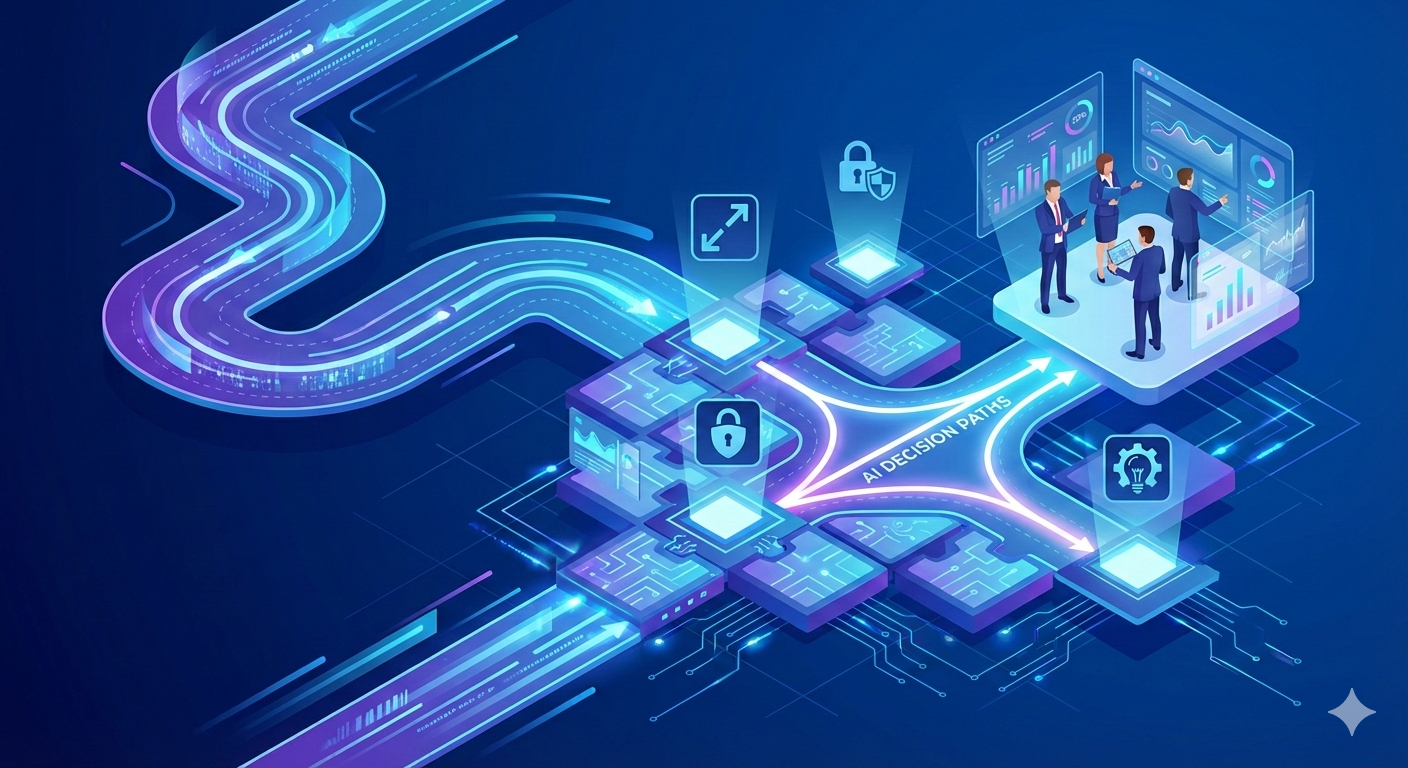
You don’t have to pick one lane. Most successful programs use a hybrid approach.
- Build core differentiators: Keep your IP-driven features in-house or under tight strategic control.
- Buy commodity capabilities: Use proven platforms for standard needs like CRM, billing, or payments.
- Partner for speed: Engage a development partner for accelerated delivery, staff augmentation, or managed services.
This combination reduces time-to-value while protecting your strategic assets.
Security and compliance: a non-negotiable requirement
Security isn’t an afterthought. It's woven into design, testing, and deployment. Enterprises must balance usability with controls. Here’s a checklist I use:
- Threat modeling early in the design phase
- Role-based access controls and least privilege
- End-to-end encryption and key management
- Automated security testing in CI/CD pipelines
- Regular third-party penetration tests and audit readiness
Compliance often requires specific data handling, retention, and reporting. Build those requirements into the data model and pipelines—not as an add-on.
Scaling teams and processes for custom projects
Tech isn't the only thing that scales. Your organization must evolve too. Teams need to move from heroic, deadline-driven development to sustainable delivery practices.
Consider these structural practices:
- Cross-functional squads aligned to business outcomes
- Continuous delivery with deployment automation
- Shared backlog with prioritization driven by ROI
- Regular architecture reviews and a lightweight governance model
I've seen teams that adopted these and went from quarterly releases to weekly rollouts. The key is discipline: automation, observability, and a small set of meaningful metrics.
Case study snapshots (anonymized)
Here are two short, anonymized examples to illustrate impact.
Global manufacturer: operational efficiency
Challenge: A large manufacturer had siloed systems across regional plants. Manual reconciliation delayed financial close and disrupted supply chain forecasts.
Approach: We designed a modular integration layer and a unified operational dashboard. We prioritized a single high-impact workflow—material requisition—to demonstrate value.
Result: Requisition cycle time dropped by 35%, inventory discrepancies reduced, and finance closed books three days faster. The pilot justified a staged rollout across other plants.
Scale-up SaaS provider: faster time-to-market
Challenge: A SaaS company struggled with onboarding new enterprise customers because their provisioning process was manual and error-prone.
Approach: We automated provisioning with an API-first architecture and introduced role-based templates to manage enterprise-specific configurations.
Result: Onboarding time dropped from days to hours, sales cycle shortened, and net revenue retention improved measurably.
When custom software is the right call—and when it's not
Custom software isn't a panacea. Choose it when:
- Your process or product differentiator requires software not available in the market.
- Long-term TCO favors own-and-operate vs. perpetual licensing.
- You need tight integration with specialized hardware, proprietary data, or strict compliance needs.
Conversely, consider buy or configure-first when:
- The capability is largely commodity and low strategic value.
- You need a rapid, low-risk pilot with minimal engineering overhead.
- You can't commit to ongoing maintenance and ownership.
Hybrid approaches often provide the best balance: leverage platforms for common capabilities and reserve custom development for strategic differentiators.
Practical roadmap for getting started
If you're considering Custom application development, here's a practical, low-risk way to begin. I use a similar roadmap with clients to build momentum and reduce risk.
- Align on business outcomes: pick one or two measurable goals (e.g., reduce manual processing by X hours, cut onboarding time by Y%).
- Discovery and integration scan: map systems, data flows, and stakeholder needs in 2–4 weeks.
- MVP planning: identify the smallest meaningful scope that delivers the business outcome.
- Iterative delivery: build in 2–4 week sprints, ship features incrementally, and measure impact.
- Operationalize: add monitoring, runbooks, and a support model before broad rollout.
- Scale: expand functionality and regions based on measured outcomes, not assumptions.
Following this roadmap reduces sunk costs and produces early wins to sustain executive support.
How Agami Technologies helps enterprises win with custom software
At Agami Technologies, we focus on building enterprise software solutions that combine the right architecture, domain expertise, and delivery discipline. We bring experience across cloud-native systems, integrations with ERP/CRM platforms, and security-first development practices.
We typically start with a focused discovery to define the business outcome and integration risks. Then we move into an API-first MVP approach that proves value quickly and lays the foundation for scaling.
Our teams are fluent in modern engineering practices—CI/CD, observability, microservices—and in pragmatic tradeoffs: when to optimize for cost, latency, or developer velocity.
Questions to ask your leadership team today
If you want to move from concept to action, ask these internal questions to create alignment:
- What three business outcomes would justify a multi-year custom software program?
- Which processes cause the most friction for customers or internally?
- Do we have the operational muscle (SRE, security, support) to own software post-launch?
- How do we measure success—what metrics will convince the CFO?
Answering these will keep conversations focused and practical. In my experience, that’s the biggest predictor of success.
Final thoughts: invest strategically, iterate quickly
Custom software development is about leverage. When you align product, engineering, and operations around measurable outcomes, software becomes an engine for growth—not just a cost center.
Remember: start with a concrete problem, design for modularity and observability, and measure impact relentlessly. Avoid the two classic mistakes: building a massive monolith before validating value, and treating integration as an afterthought.
If your organization needs a partner to design or scale enterprise-grade custom solutions, Agami Technologies has practical experience helping enterprises and scale-ups do exactly that. We build software tailored for business growth and help teams deliver measurable ROI.
Helpful Links & Next Steps
Ready to explore what custom software can do for your enterprise? Build Your custom software Solution: Schedule a one-on-one with our team.